Check 1
From the ground after the thaw: photograph every limb strike, hanging gutter and debris field before cleanup - wide and close, dated.
What Oklahoma ice storms actually do to roofs and gutters - limb loads, ice at the eaves, freeze-thaw in every crack - and the checks that matter after the thaw.
Call center hours: Mon-Fri 7am-10pm, Sat 8am-10pm, Sun 7am-9pm (Eastern) - agents available to take your call
Tulsa's defining winter event is not snow but ice: a quarter-inch of accretion on every limb and wire turns the oak canopy into falling weight, while freeze-thaw cycling works water into every crack the warm months left.
After an ice event: read the roof and gutters for limb damage and torn hangers once it is safe, check ceilings as meltwater finds the openings, and document before cleanup erases the evidence.
Call when limbs are on the roof, gutters are hanging, or new stains appear during the thaw - and book the limb trim in a calm season, because the next ice storm is a matter of when.
Oklahoma's winter signature is the ice storm - the event long-time Tulsans date their roofs by. Freezing rain coats every surface in glass: limbs come down across whole neighborhoods in a night, gutters tear from their hangers, and roofs take impacts and loads no shingle maker ever contemplated. This guide covers what ice actually does to a roof system, why the thaw is as diagnostic as the storm, and what to check, in what order, when the power comes back.
Start with weight. A half-inch of ice on a mature oak multiplies the load on every limb; the canopy that shades your roof all summer becomes the thing that falls on it. Limb strikes puncture shingles, crack tile and decking, and bend gutters off their line - damage that extends well past the visible hole, into the deck and the courses around the impact.
The second mechanism is quieter: freeze-thaw. Water that seeped into a shingle crack, a split seam or a gutter joint on a mild afternoon expands as ice at night, wedging the opening wider, cycle after cycle for weeks. Roofs do not need an ice storm for this - an ordinary Tulsa January of swinging temperatures runs the same cycle - but an ice event loads every existing weakness at once and adds meltwater, standing everywhere, looking for the entries it just widened.
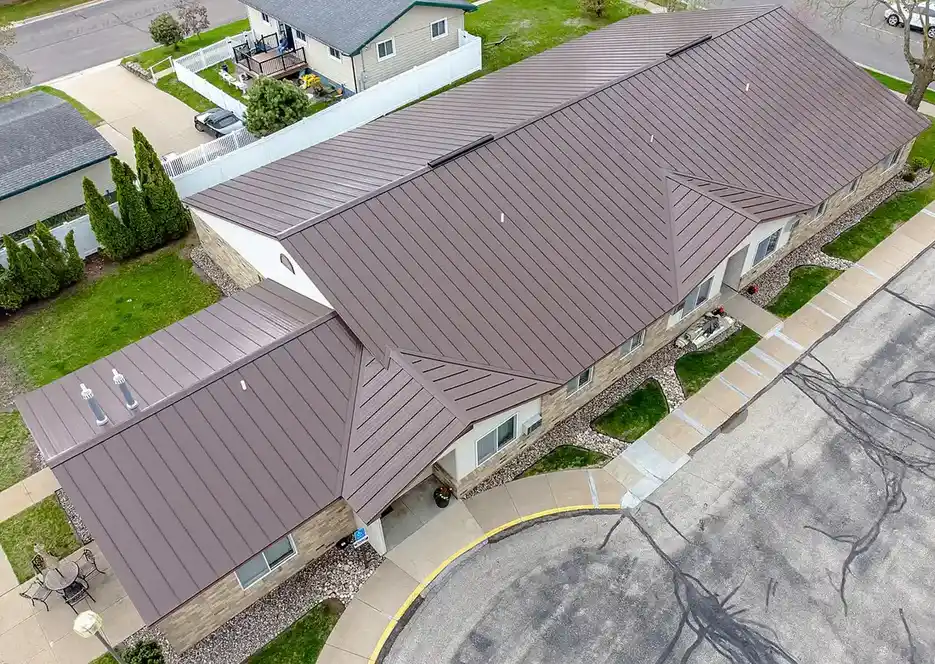
Gutters are ice's favorite target: they collect freezing rain, hold it, and gain weight along their whole run until hangers bend or tear out of the fascia. A gutter that survives hanging may still lose its pitch, holding water all spring. After any real ice event, the gutter line deserves the same inspection as the roof - alignment, hangers, joints split by expansion, and downspout elbows parted by frozen columns.
Ice sliding is the metal-roof footnote: sheets that release from a metal roof come down with force, tearing at eave metal and gutter lines on the way. Snow and ice retention is a design item on metal roofs in this climate for exactly that reason, and post-storm checks at the eaves belong on the metal owner's list.
The melt is the diagnostic window. As ice leaves, water stands and runs in unusual places: over dammed eaves, through new openings, out of gutter joints that split. New ceiling stains in the thaw days are the roof reporting damage the ice hid. Walk the property once it is safe: limbs and pieces in the yard, gutter lines sagging, downspouts parted, shingle fields disturbed where slides or limbs crossed.
Document before the cleanup crews make it tidy: dated photos of impacts, hanging gutters and debris fields are the claim record, and they are perishable. Then the order of work: safety first (limbs under tension, damaged electrical drops are not homeowner work), water entry covered, and the permanent reads scheduled in daylight - on the roof and under it, because ice damage, like hail, hides half of itself.
From the ground after the thaw: photograph every limb strike, hanging gutter and debris field before cleanup - wide and close, dated.
Run a hand along the gutter line visually from below: sags, parted downspouts and split joints show against the fascia line.
Keep a ceiling watch through the thaw week: new stains get dates - melt timing is diagnostic.
List the trees that overhang the roof and their visible deadwood now, while the evidence is fresh, for the calm-season trimmer.
Ice cannot be kept off a Tulsa roof, but its damage can be designed down: eave protection membranes that seal the deck where ice backs water up, gutter hangers spaced and fastened for load, downspout straps that hold a frozen column, and - above all - a canopy managed so the falling-weight inventory over the roof is as small as the trees allow.
Metal roofs add their own design answer: retention that keeps sliding sheets from leaving as one piece, and eave details built for the slide that happens anyway. None of this is exotic; it is the local specification, and any roofer working Green Country winters should raise these items before the homeowner has to.
A roof built for Oklahoma summers has nothing to fear from winter.
Heat and hail get the attention here, and winter is treated as the roof's rest season.
Ice is Tulsa's other roof season, with its own damage mechanics.
Limb loads, torn gutters, freeze-thaw in every crack and meltwater through new openings - the winter read belongs on the same calendar as the storm-season one.
Ice storms are metro-wide events, which changes the practicalities: every tree crew and roofer is triaged for weeks, tarps and gutter sections run scarce, and the homes that get served first are the ones with documentation ready and damage clearly scoped. The calm-season file - photos, reports, a known roofer's number - is a queue position you build yourself, in advance, for free.
It is also a reason to be patient with sequencing after a big event: stabilization and safety work rightly jumps the line, and permanent scopes drawn in daylight a week later are better scopes than contracts signed in a dark, cold yard. The storm's urgency is real; the contract's usually is not.
A professional ice response sequences safety, evidence and water: tension limbs and electrical hazards flagged off, impacts photographed before cleanup, active entry covered when surfaces allow, and the full daylight read - fields, decks, gutter alignment, attic - scheduled as its own visit. The scope that follows separates impact, system and revealed wear in writing, because each is argued differently and paid for differently.
Climbing to inspect on iced or limb-loaded roofs - the post-storm ground read exists because the roof read can wait for safe footing.
Clearing all the debris for tidiness before the documentation - the yard is an exhibit until it is photographed.
Assuming no leak means no damage: ice and impacts hide half their work, and the thaw week's ceiling watch is part of the inspection.
Rehanging a torn gutter run on its old worked-out holes and calling the system restored - pitch and hold both live in the fastening.
The trees finish the picture. Tulsa is a city of oaks - post oaks, red oaks, pecans and elms canopy whole neighborhoods - and they shade roofs into dampness, fill valleys and gutters with leaves and acorns, and drop limbs in wind and ice. Roof care in Tulsa is always partly tree care, and the neighborhoods differ mostly in how the four forces - storm, sun, water and canopy - combine over their streets.
Spring's second act is water volume. The storms that do not bring hail bring rain in bulk - an inch an hour is ordinary in a Tulsa April - and the roofs that leak in spring are more often drowned than damaged: valleys overwhelmed, gutters undersized or clogged, downspouts that cannot carry what the roof delivers. Homes that check drainage before the season start it ahead of the curve.
Iced surfaces and tension-loaded limbs are professional terrain; the ground read - photos, yard evidence, ceiling checks - is the homeowner's part.
Dated photos of limb strikes, gutter damage and debris fields before cleanup; note outage and storm dates for the file.
Active leaks from impacts get tarped or temporarily sealed by a crew once surfaces are safe to work.
Roof fields, deck at impacts, gutter alignment and hangers, attic side - the complete map, then the permanent scope.
An ice-damage report separates three things in writing: impact damage from the event, system damage (gutters, hangers, eave metal), and wear the ice merely revealed. Each gets its own photos and its own recommendation - because claims, repairs and maintenance each run on a different one of those lists.
Keep the report with the storm's dates and your pre-storm roof file. Ice events repeat in this climate on a scale of years, and the file that documents two of them, with the repairs between, is a history no adjuster or buyer argues with.
Ice is the season Tulsa roofs are least prepared for and most defined by. The defenses are unglamorous - sound hangers, renewed seals, a managed canopy, a kept file - and they are all built in calm weather. The next ice storm is already on the calendar; it just has not been dated yet.
Yes. Limb impacts crack decking and fracture shingles beyond the visible dent, and the leak often waits for the next rain to announce itself. The impact deserves a daylight read of the field, the deck from the attic side, and the courses around the strike - documented while the storm's evidence is fresh.
It can work on existing weaknesses: freeze-thaw widening cracks and splits, ice backing up at eaves on low slopes and forcing meltwater under laps. A sound, well-sealed roof rides an ice event out; a tired one comes out of it measurably older. The post-thaw inspection grades which of those yours was.
It depends on the run's condition once it is down or lifted: bent-but-sound metal can be re-pitched and re-hung into sound fascia; runs torn at joints, cracked at outlets or ripped along their length are replacement sections. The inspection grades each run - ice damage is rarely uniform along a whole house.
Sudden ice-storm damage - limb impacts, torn gutters - is generally the kind of event policies address, and the documentation rules are the same as for wind and hail: dated photos, a written damage map, stabilization records. Wear that ice merely revealed is the contested zone, which is why the map separates the two honestly.
One call connects you with a roofing professional serving Tulsa and the surrounding Green Country communities - inspection, repair, replacement and upkeep.
📞 Call Now