Check 1
Run a hose into each gutter run: every downspout should roar, not trickle - silence is a clog with an address.
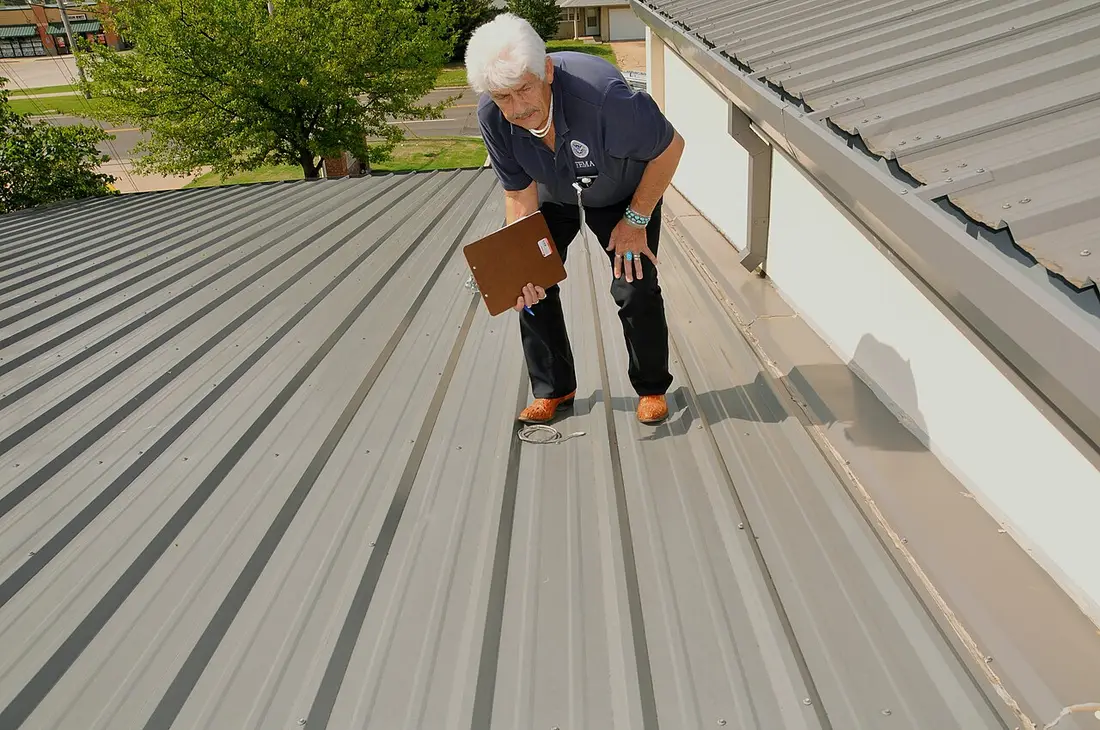
The pre-season roof checklist for Tulsa homes: drainage, seals, loose material and the attic - done in late winter, before the spring systems grade your roof for you.
Call center hours: Mon-Fri 7am-10pm, Sat 8am-10pm, Sun 7am-9pm (Eastern) - agents available to take your call
Storm season does not damage sound roofs - it finds the damage the dry months already did, and delivers hail, wind and inches of rain from March into June to prove it.
Prepare ahead of the season: clear every water path, renew split sealant, secure loose material, document the roof with photos, and check the attic side - the five things that decide how a roof weathers the systems.
Call before the season if drainage is blocked, seals have split or the roof is past its range - and within days after any storm that drops material in your yard or starts a new leak.
Tulsa's storm season is not a single event but a four-month examination: system after system crossing the plains with hail, straight-line wind and rain measured in inches per hour. Roofs do not experience it as weather; they experience it as grading - of every seam, drain and loose edge the dry months created. This guide is the study plan, timed for the calm weeks before the season, while the fixes are still small and the schedule is still yours.
In a Tulsa downpour, readiness is drainage readiness. Walk the system in your mind: rain lands, valleys gather it, gutters receive it, downspouts carry it away from the foundation. Every break in that chain is an overflow, and every overflow is water soaking fascia, siding or soil it should never touch. Clear gutters and downspout elbows of the winter's oak litter, confirm every downspout actually runs - a hose at the gutter tells the truth - and clear the valleys where two planes pour into one line.
Flat sections have their own version: drains and scuppers open, ponds mapped from the last rain and their causes addressed. A flat section that enters storm season with a known pond enters it with a known leak address; the season will simply deliver the water to prove it.
The second pass works the detail list the summer and winter attacked: sealant rings at vents, pipes and chimneys; flashing joints at walls and valleys; the laps and ridge caps wind loves. Split, shrunken or missing sealant is renewed now, while it is a tube-and-ladder job. Lifted or curled shingle tabs are reseated or replaced, slipped pieces reset, cracked pieces swapped.
Every loose piece found calmly in February is a piece that will not be found in the yard in April with the underlayment beneath it opened to the storm. Check the gutters' pitch and hangers in the same pass - a run that sags in calm weather becomes a debris dam under storm load.
Finish below the roof and above it. In the attic, look for daylight at penetrations, old stains that map past leaks, damp or compressed insulation, and any deck softness. Overhead, read the trees: dead limbs within reach of the roof are the season's scheduled emergencies, and a calm-weather trim is the smartest storm work there is.
Then start the season's file: dated photos of every slope from the ground, the inspection notes, and a saved number to call. When a storm does find something, that file - showing the roof's condition before the weather - is what turns a stressful week into a documented, handled one. Preparation is partly physical; the rest is evidence.
Run a hose into each gutter run: every downspout should roar, not trickle - silence is a clog with an address.
Photograph every slope from the ground on a calm day, plus the gutters' contents before cleaning. That is the season's 'before' set.
Look up before you look at the roof: dead limbs within fall of the house get a tree crew's date, not a hope.
Find the attic hatch and clear its access now - the first storm is the wrong time to discover it is painted shut.
Ask roofers what the season's opening calls look like and the list barely changes: overflow from gutters that filled over winter, leaks at vent collars whose sealant split in the summer bake, creased shingles from the first strong outflow, and valleys dammed with oak litter pouring water under the courses. None of these are storm damage in the true sense - they are dry-season findings the storm merely delivered.
The comforting half of that list: every item on it was cheap in February. The prep work in this guide is not a new invention each year; it is the same short list, and the homes that run it treat storm season as weather rather than as an annual emergency with a roof-shaped cause.
If a roof is going to leak, it will leak - preparation does not change the outcome.
Fatalism is common after a bad season, and it sounds like experience.
Nearly every storm-season leak traces to a condition that existed, findable and fixable, in the dry months.
The storm is the messenger. The seams, drains and loose material it reports on were set in the calm - which is why the prep happens then.
Tile roofs add two items: valleys cleared of the grit and leaf dams that pour water under courses, and cracked pieces swapped before storms funnel water onto the felt. Metal roofs add the fastener and seam check - the audit that decides whether the panels ride the season tight. Flat sections add the drain read: every scupper and drain mouth open, every pond from the last rain explained.
Rural and lake-edge homes add wind and debris: ridge and edge fastening checked against open-ground gusts, limbs over the roof assessed while the roof is dry and the tree crew can work safely, and outbuilding roofs - the most neglected on any lot - given one honest look before the season grades them.
A professional prep visit runs the season's grading rubric in advance: drainage flow-tested, seals and flashing read joint by joint, loose material secured, attic checked, trees flagged, and the whole condition photographed into a dated baseline. The deliverable is not the small fixes - it is the certainty, documented, that the roof entering storm season is the roof the file says it is.
Starting prep the week the first storm is forecast - the findings that matter need calm days and open schedules.
Cleaning gutters but never flow-testing the downspouts - the clog lives in the elbow, and the season will find it.
Sealing everything in sight before the inspection photographs it - prep that erases evidence hurts the claim you may need later.
Ignoring the outbuildings and the flat addition - the season grades the whole lot, including the roofs nobody looks at.
Rain is not the exception here - it is the routine. Tulsa averages around forty inches a year, much of it arriving in hard spring and fall downpours that can drop an inch in an hour. Drainage is therefore not a detail on a Tulsa roof; it is half the system. Valleys, gutters and downspouts move more water in a single April storm than some climates see in a season.
Fall's quieter risk is the backlog. Every small failure the storms exposed - a split seam, a lifted ridge, a gutter corner pulling loose - sits through the cooling nights and starts its freeze-thaw work. The fall habit that pays best is the short list done early: gutters cleared and re-pitched, seams resealed, broken shingles swapped, and replacement decisions made before the first ice arrives.
Gutters, outlets, downspout elbows, valleys and flat drains - flowing freely before the first system builds.
Split sealant, open laps and tired flashing joints resealed or repaired while they are dry-weather jobs.
Lifted shingles, slipped pieces and tired ridge caps fixed; anything the wind could take is fastened or replaced.
Dated photos of all slopes filed, dead limbs over the roof removed, and the call number saved where the household can find it.
A prep visit worth its name ends with three lists: what was done on the spot (clearing, sealing, securing), what was found that needs scheduling, and what was graded sound. Each finding carries a photo. If your prep produces only a verbal 'looks good', it produced a fraction of its value.
Keep the prep report with the season's photo file. If a storm later damages the roof, that pairing - condition documented weeks before, damage documented days after - is the cleanest claim file a homeowner can hand an adjuster.
Storm season will grade every Tulsa roof; the only choice is whether the findings arrive as a roofer's checklist in February or as water in April. The prep is short, the list is the same every year, and the homes that run it stop experiencing weather as emergency.
Late winter into early spring - February into March - ahead of the season's peak. The work is the same whenever it happens, but the schedule is not: calm-season appointments are unhurried, and every finding can be fixed before it is tested. A second, smaller pass in fall covers the second storm season and the leaf load.
Ask roofers and the list barely changes: clogged gutters overflowing into fascia, leaks at vent collars whose sealant split in summer, creased shingles from the first strong wind, and valleys dammed with oak litter pouring water under the courses. None of these are truly storm damage - they are dry-season findings the storm delivered, and every one was cheap in February.
Yes - timing changes its purpose. The pre-season read is a condition baseline and a fix list, done while everything is schedulable. The post-storm read is a damage map, drawn against evidence that fades. Doing the first makes the second faster, cleaner and far easier to argue from.
Survival is not a grade. Each season spends some of every roof - seals age, granules wash, hangers creep - and hail that 'did nothing visible' may have taken years off a slope. The prep visit is how you find out what last season actually cost, while the answer is still a list of small items.
One call connects you with a roofing professional serving Tulsa and the surrounding Green Country communities - inspection, repair, replacement and upkeep.
📞 Call Now