Check 1
Walk the drip line after a storm: trenches, splash stains and washed mulch map exactly where collection is missing or failing.
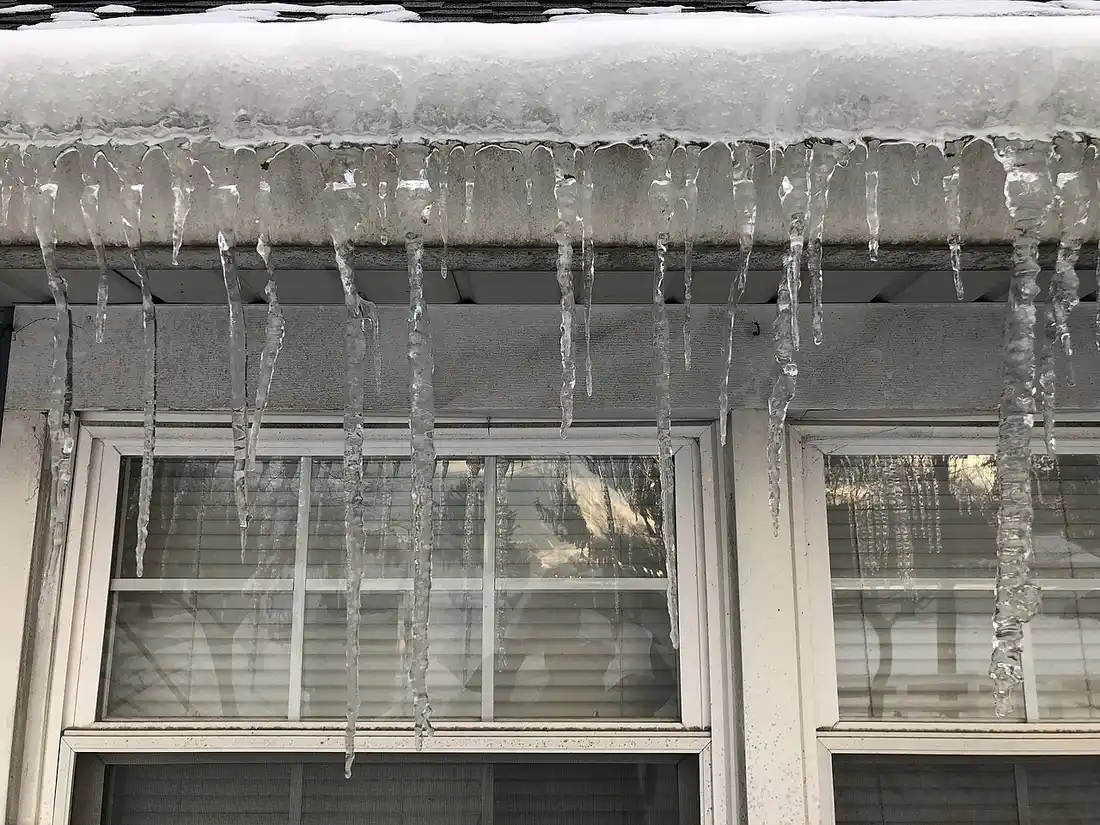
A Tulsa homeowner's guide to gutter decisions: why this rain climate makes gutters structural, how sizing really works, and why the discharge end matters as much as the eave.
Call center hours: Mon-Fri 7am-10pm, Sat 8am-10pm, Sun 7am-9pm (Eastern) - agents available to take your call
In a forty-inch rain climate on clay soil, gutters are not trim - they are the second half of the roof system and part of the foundation's protection, deciding where a roof's whole collection lands.
Decide from the water map: plane sizes and pitches set gutter profile and downspout count; soil and slope set the discharge plan; the trees set the upkeep rhythm.
Call when overflow, erosion lines or foundation dampness say the current answer is wrong - or before a new roof, so the two systems are planned together.
Ask a Tulsa homeowner about their gutters and you will usually hear about cleaning. Ask a foundation repairer and you will hear a different sermon: about roof water - thousands of gallons a year - delivered to the worst address on the lot. This guide takes the gutters' side of the story: what the system actually does in this climate, how its sizing decisions are honestly made, and why the end of the downspout matters as much as the run at the eave.
An inch of rain on a mid-sized Tulsa roof is well over a thousand gallons, and a roof without working gutters drops it in a curtain at the foundation line. The results write themselves on the house: soil eroded in a trench along the drip line, mulch and beds washed, siding and brick stained and soaked at the base, crawl spaces and basements taking damp, and - the Tulsa special - clay soil swelling against the foundation when wet and shrinking away in drought, cycling the movement that cracks walls and sticks doors.
The roof itself suffers too. Water pouring off an eave splashes back onto fascia and the bottom courses, and where a lower roof receives an upper roof's whole discharge, the surface below wears years ahead of its neighbors. Gutters exist to break that chain at the moment of collection - everything else in this guide is detail.
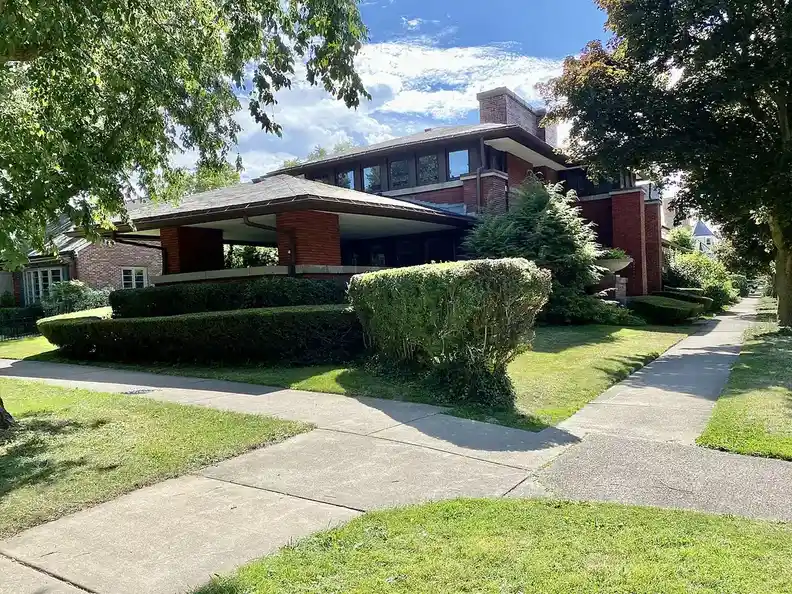
Gutter sizing follows a calculation: the roof plane's area, adjusted for pitch, against the local rain intensity. Tulsa's intensities are high - an inch an hour is an ordinary storm, not a record - and steep planes deliver their water faster than flat ones of the same size. The older five-inch default honestly serves small, gentle planes; the big steep planes of the newer suburbs routinely calculate into six-inch profiles with larger downspouts.
Downspouts are the second half of the arithmetic: each pipe drains a limited area, and valley outflows concentrate demand at single corners. A system can have adequate gutters and still overflow everywhere because its pipes are too few or too small - the collection is fine, the delivery is not. Any installer quoting your home should be able to walk the planes and show the arithmetic per run; a single size quoted for the whole house, unmeasured, is a habit, not a calculation.
Collected water has to be delivered somewhere, and 'at the base of the wall' is the one wrong answer clay country offers. Extensions that carry water several feet out onto falling grade, splash routing that spreads it, buried drains that move it to a pop-up outlet across the yard - these are not accessories. They are the point of the system: a downspout pouring at the foundation is a machine for moving foundation soil moisture in exactly the rhythm that damages it.
Plan the discharge with the lot, not against it: never onto a neighbor's side of the line, never into a walkway's ice patch in winter, never against a slope that returns it to the house. A few minutes of grade-reading at install time is the least expensive foundation maintenance a Tulsa home ever gets.
Walk the drip line after a storm: trenches, splash stains and washed mulch map exactly where collection is missing or failing.
Watch one hard rain from the yard (from a porch, not under the eaves): note every overflow point and where each downspout discharges.
Press a thumb along the soil at the foundation after rain: saturated at the wall while the yard is merely wet means the roof's water is landing there.
Count your downspouts per roof plane and eyeball their sizes against the planes they serve - the mismatch cases are usually visible once you look.
Every lot has a water personality: where the grade falls, where beds and walks sit relative to the drip lines, where the soil stays wet longest after a storm. The gutter plan that works is drawn on that personality - discharge onto the falling side, never across a walk that ices, never into the bed that floods the crawl space vent.
Neighbors' lots count too. Discharge that solves your foundation by watering the lot line has merely exported the problem, and in platted subdivisions the drainage easements tell you where the water was always meant to go. The honest install conversation includes the map beyond your own eaves.
Gutters are decorative trim - a house does fine without them.
Plenty of Tulsa homes were built gutter-light, and the drip-line trenches beneath their eaves are easy to mistake for landscaping.
In Tulsa's rain volume and clay soil, gutters are structure protection.
They decide where thousands of gallons a year land. The trench under an unguttered eave is the roof's water doing foundation work - the opposite of decoration.
Homeowners sometimes hear that adding or changing gutters affects the roof above them. The truthful version is narrow: work that disturbs the shingle edge - lifting courses to tuck guards or hangers - can create problems and arguments; work confined to the fascia and the gutter itself leaves the roof system alone. It is one more reason the fitting method matters and is worth a direct question before any crew starts.
The systems also age into each other: a roof replacement that changes pitch or adds a plane changes the gutter arithmetic, and gutter work done a year before a planned reroof should be scoped to survive it. Sequencing the two projects together, even on paper, saves the second crew from undoing the first.
A professional gutter plan starts with the roof's water, not the gutter catalog: planes measured, delivery calculated per run, profile and pipe sizes derived, discharge walked on the actual grade with the foundation in mind. The installation then gets its craft - true pitch, hangers into sound fascia, corners sealed, flow tested. The system that results is boring in the best way: storms pass and nothing about the house's water is news.
Quoting one size for the whole house by habit - planes differ, and the big steep one is the one that overflows.
Treating discharge as an afterthought - a perfectly hung system pouring at the foundation is a failure with good metalwork.
Hanging new gutters on unexamined fascia - the system's weight and water belong on sound wood or not at all.
Judging gutters by cleaning alone: overflow on a clean system is arithmetic, and no amount of scooping fixes arithmetic.
Rain is not the exception here - it is the routine. Tulsa averages around forty inches a year, much of it arriving in hard spring and fall downpours that can drop an inch in an hour. Drainage is therefore not a detail on a Tulsa roof; it is half the system. Valleys, gutters and downspouts move more water in a single April storm than some climates see in a season.
Fall's quieter risk is the backlog. Every small failure the storms exposed - a split seam, a lifted ridge, a gutter corner pulling loose - sits through the cooling nights and starts its freeze-thaw work. The fall habit that pays best is the short list done early: gutters cleared and re-pitched, seams resealed, broken shingles swapped, and replacement decisions made before the first ice arrives.
Erosion trenches, staining, damp at the base - the evidence of what the current (or missing) system is doing, mapped before any product talk.
Each run's delivery calculated from area and pitch against Tulsa rain rates - profile and downspout decisions follow.
Decide where each downspout's water should end up - several feet out, on falling grade - and let that plan shape placement.
Canopy sets the rhythm: cleaning interval, guard decisions, and outlet checks are chosen for the litter your roof actually collects.
A gutter plan worth signing shows the water map: each run's plane area and pitch, the profile chosen and why, downspout count and placement reasoning, and each discharge point with its distance and grade. 'Standard install' is not a plan; the map is.
Keep the plan and sizes in the home file with the installation photos. Future section work, guard fitting and even landscaping drainage decisions all read from it - a drainage system, like a roof, is an asset with a paper life.
Gutters in Tulsa are where roofing meets foundations, and the conversation should be held at that level: water measured, sizes calculated, discharge planned. Get those three right and the system disappears into the background of the house's life - which is exactly what good drainage does.
In this climate, effectively yes on any roof line over living space, beds or foundation that matters. The rare exceptions are wide overhangs over falling, gravel ground far from walls. The question is rarely whether - it is sizing, placement and discharge. Homes 'without gutter problems' in Tulsa are usually homes whose gutters work; the problems belong to the homes where the water goes unmanaged.
No - they are better where the arithmetic says so: big, steep planes and valley-concentrated delivery. On small, gentle planes, five-inch systems sized and pitched correctly perform fully, and oversizing everywhere adds cost without adding function. The honest installer sizes per run and can show why each run got its answer.
In clay soil, demonstrably: the moisture cycle at the foundation line is a leading driver of the movement that cracks and sticks. Gutters do not waterproof a foundation, but they control the largest single water source at its edge - the roof. Foundation specialists in this metro ask about gutter discharge for the same reason roofers ask about drainage: it is the same water, at the next address.
Read it as a measurement: that trench is your roof's uncollected delivery, carved one storm at a time. The fix is the system - collection sized to the plane, discharge carried past the trench to falling grade. Filling the trench without collecting the water just gives the next storm fresh soil to move.
The gutter line connects you with a Tulsa gutter professional - sizing, guards, cleaning and repair across Green Country.
📞 Call Now